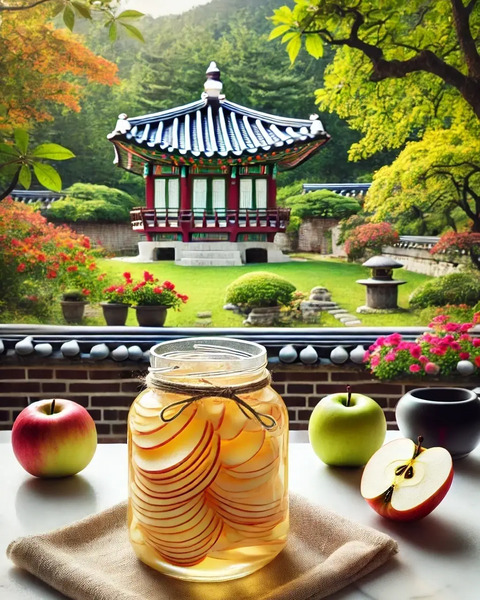
Hello, my gorgeous people! After I shared my knowledge on cheong syrup basics on my blog, I wanted to go a little specific, so here is the apple cheong recipe! It’s getting chillier and starting to feel like autumn now in Norway. Autumn means a lot of fruits and vegetables are ready to be harvested and enjoyed. One of the most available fruits around us in the autumn in Norway is the apple. We should appreciate and enjoy this beautiful fruit and try lots of recipes with it. One of them is making apple choeng, the Korean raw apple syrup.
This apple cheong recipe is quite simple yet so flavorful, so let’s get right into it!
Introduction to Apple Cheong Recipe
Please allow me to give you a little introduction to this apple cheong recipe. 🍎 Apple cheong is one of the most popular varieties of cheong, a traditional raw Korean fruit syrup. You can leave the cheong to ferment, which is a great natural way to preserve your fruits and vegetables!
Apple cheong is made by slicing apples and layering them with sugar. Within a few days, the sugar dissolves and takes the juices out of the apples, making what we call in Korea, the “apple essence.”
You can read more about what a cheong is here.
What is Cheong Syrup?
Cheong is a Korean preservation method that mixes sugar with fresh fruits, often mashed.

Cheong Syrup Basics| With Any Fruits and Vegetables
Learn the basics of cheong syrup, a delicious, healthy, and raw Korean syrup. You can make it with any kind of fruit or vegetable with expert tips!
Q 1. Is cheong different from jam?
Unlike jam, where you need to cook the fruits with sugar, you leave the fruits fresh and untreated with heat when you are making a cheong. That makes the fruit cheong taste fresher and stronger than regular jam. For that reason, we call cheong a “fruit extract” in Korea.
Q 2. Is cheong different from syrup?
Cheong is also different from regular syrup, as you would let the sugar and fruit mix ferment when making Cheong. Depending on the type of fruits and the recipes, the cheong might have a shorter shelf life or can last for several years.
Here are some of the popular cheong varieties in Korea.
Varieties of Cheong
[ Berry Cheong ]
[ Citrus Cheong ]
[ Other Cheong ]
- Maesil Cheong (Korean green plum cheong)
- Cherry Cheong
- Apple Cheong
Then let’s take a look at the ingredients to make a cheong!
Apple Cheong Uses
There are also many different ways to use your delicious and flavorful apple cheong! Here are the top three ways to use your Apple Cheong.

Add sparkling water to Apple Cheong to make homemade apple cider!
1. Homemade Apple Soft Drink
First and foremost, any cheong can be made into a drink, and it is one of the most popular ways to enjoy cheong in Korea. So the apple cheong would be the same.
How Is Apple Cheong Different from Apple Juice?
Apple cheong will naturally ferment as time passes by. We also enhance the apple flavor with a few magic ingredients (revealed in the recipe below), so it’s a whole new experience compared to drinking apple juice.
How to Make an Apple Drink with Apple Syrup
Add a few spoons of apple syrup from apple cheong into a cup of cold water. You can even add it to sparkling water to make a homemade apple soda! You can adjust the apple syrup amount in the drink to your liking.
You can enjoy the apple cheong either in a cold drink like this, or you can add it to hot water to enjoy the apple tea.

A warm cup of apple cheong tea is just absolutely fantastic.
2. Homemade Apple Tea
Make yourself a warm cup of apple tea with homemade apple cheong. Bring some water to a boil, and add some apple cheong as much as you like. Take a spoonful of apple cheong into the hot water and mix. Taste and add more to your liking. It’s such a nice, warm, sweet, and flavorful tea for the colder season!

3. Salad Dressing
Try this apple cheong as a salad dressing! There are many ways to use apple cheong as a salad dressing.
How to Use Salad Dressing with Apple Cheong
- Solely with apple syrup
- Apple syrup and apple pulp (the whole apple cheong)
- Adding apple cheong to any dressing
There are many other ways to use apple cheong in your recipes, and you can read them in my post Cheong 101.
Key Ingredients for Apple Cheong

1. Sugar
Using high-quality organic sugar like this will determine the final result of the cheong. Great sugar can not only preserve and ferment better, but also taste better!
Not only that, but using organic sugar is a great way to save our planet. There are a lot of pesticides used in growing regular sugar crops.
Let’s get some great organic cane sugar for taste, preservation, and the planet.
2. Allulose Fiber Syrup
My Normal Keto Allulose 17.1 Fl Oz – Allulose, Monk Fruit and Stevia Blend
Allulose syrup is used in Korean kitchens a lot. It adds sweetness to food with fewer calories, and it has fiber, which slows down the blood sugar spikes and hinders the sugar from being absorbed into our bodies.
When used in making cheongs, allulose syrup helps to accelerate the process. If you use only sugar, it takes longer to dissolve the sugar (sometimes it doesn’t dissolve at all!), and the syrup can have a high amount of sugar.
Pouring allulose syrup can also help the cheong to ferment well instead of being spoiled, as the liquid prevents the virus from entering the cheong.

Apples for the cheong don’t have to be completely ripe.
3. Apples
Any kind of apples could work, but sour apples work better. You can make a great cheong with bug-bitten apples from a garden or even unripe green apples. As a matter of fact, unripe fruits make amazing cheongs because of their tartness.
We will chop or slice the apples very thinly and use mostly the syrup that oozes out of the apples. So I recommend using organic apples or washing the skin very well before making a cheong.
4. Optional Spices
You can use optional spices for your apple cheong, such as cinnamon powder or cardamom.

Health Benefits of Apple Cheong
Just before we get into the apple cheong recipe, let me tell you how apple cheong is not only delicious but also has health benefits! This will make you want to try this apple cheong for sure.
Here are some benefits of eating and drinking apple cheong.
- Improves digestion from dietary fiber called pectin
- A stronger immune system from vitamin C
- Skin health from vitamin C and other antioxidants in apples
- Improves sleep quality from magnesium in apples

Apple Cheong Recipe | How to Make Apple Syrup


Apple Cheong (Korean Apple Syrup)
Ingredients
Method
- In a washing bowl, put the apples. Sprinkle the baking soda on top of the apples.
- Add cold water to the bowl until the apples submerge. Then add vinegar. Mix.
- Rub all the apples with water. Rinse them thoroughly with running water.
- Dab the water out of the apples. Let them dry completely.
- When the apples are completely dry, remove the stems. Cut them in half and remove the core, top, and bottom. Then slice them very thinly. Slice them as thinly as you can.

- Prepare a big pot. Add water to the pot. Take the glass jar you want to store your cheong in and put the glass jar upside down.
- Slowly bring the water to a boil. Let the glass jar be disinfected with boiling water. Once the water starts to boil, turn down the heat to medium-high. Let it boil for about 5 minutes.

- Do not put a glass jar straight into boiling water. It can break the glass. Put the glass in the pot first, then bring it to a boil slowly.
- Take out the glass jar and let it completely dry.
- Add some apple slices to the disinfected glass jar. Sprinkle some sugar. Add more apple slices to the glass jar, and sprinkle the brown sugar in between the apple slices. Repeat until you use all the apple slices and sugar.
- Using a wooden spoon, mix the sugar and apple slices roughly. You can press the apple slices with a wooden spoon.

- Then pour the syrup on top. The syrup will drip down to the bottom naturally. Cover the top with more sugar. Close the jar lightly.
- Store the jar in a cool, dark place. Check how it’s doing every day. You can press the apple slices with a wooden spoon each time. All the sugar will be dissolved eventually.
- Using a strainer, strain the apple slices and syrup after a week.
- Store the syrup in a separate jar or bottle. Store it in the fridge for up to 3 months. It can naturally ferment as time passes.
- Enjoy your apple cheong in a dish or a drink!
How to Store Apple Cheong
1. Store in the Fridge
You can store apple cheong (syrup with cherry fruits) somewhere dark and chill, like a cold basement. Storing apple cheong at 10–22°C (50–72°F) is recommended.
This ideal temperature lets the maesil cheong ferment naturally and develop its flavors. But try not to go too hot or below freezing temperatures. You can even store it in the fridge, although it will slow down the fermentation process.

You can either pour the syrup or sprinkle more brown sugar on top to cover the top of the apple slices.
2. Cover Syrup on Top
This is one of the most important tips that applies to all kinds of cheongs. Make sure to cover the apple cheong with brown sugar. With softer fruits like strawberries, you can press down on the fruit to have the juice ooze out of it, and the rest of the fruit bits are submerged in their own juice.
This process ensures no bacteria in the air get into the cheong, which can spoil our precious cheong!
How Apple Cheong Ferments
Apples have a softer texture than many other fruits, so they will become mushy and exude lots of syrup within a day or two. (Many other fruits and vegetables can take weeks to start producing syrup!)
Apples ferment very well, as you can tell from apple ciders and apple vinegar. Unless you want apple vinegar, you can stop the fermentation by quickly simmering the whole apple cheong bottle.
Summary of Apple Cheong
I hope you enjoyed this apple cheong recipe! Sweet and tart, this apple cheong can make a beautiful drink both hot and cold. You can also add it to a dish to add sweetness and freshness to the apples. My favorite way to use it is to add it to a salad dressing. It makes a gorgeous salad dressing. Try this apple cheong in other dishes and experiment with it on your own. And please let me know if you liked it 😊
If you liked this apple cheong recipe, you can read other cheong recipes by clicking the link below. There are many more to come, so follow for more. 🥰🍏🍎
Cheong Recipes

Blueberry Cheong Recipe | How to Make Korean Blueberry Syrup
Make raw Korean syrup with the superfood blueberries! Here is the blueberry cheong recipe you’ve been waiting for.

Strawberry Cheong Recipe | For Korean Desserts and Drinks
Strawberry cheong is a great way to preserve fresh strawberries. It’s a versatile dish that can be used to make lots of desserts and drinks! Read more here.

Maesil Cheong | Raw Korean Plum Extract | Syrup Recipe & Uses
Maesil cheong is a delicious, fragrant, tart, fresh, and sweet raw Korean syrup made with a Korean plum called maesil. Learn the recipe and what to use it for.

Lemon Cheong Recipe | How to Make Korean Raw Lemon Syrup
This zesty, citrusy, and vibrant lemon cheong recipe can be used in so many Korean cuisines! Learn how to make Korean raw lemon syrup packed with vitamin C.

Tangerine Cheong Recipe | How to Make Korean Tangerine Syrup
Try this Korean tangerine cheong recipe. You can get both the zesty, sweet tangerine syrup and the marmalade in one recipe! Learn more.

Raw Black Cherry Syrup Recipe | All About Cherry Cheong
Learn how to make an easy, raw, homemade cherry syrup that is packed with flavors and nutrients! Using the Korean Cheong method, this is a healthy syrup.

Raspberry Cheong | How to Make Korean Raw Raspberry Syrup
Raspberry cheong is a raw Korean syrup. It is packed with fresh raspberry flavors, scents, colors, and nutrients! Learn this versatile raspberry cheong recipe.
Affiliate Disclosure: As an Amazon Associate, I may earn from qualifying purchases at no additional cost to you if you choose to purchase the recommended product. The support allows me to research and continue working to provide the best information for you. Please rest assured that I only give my honest opinions and recommendations.
Leave a Reply