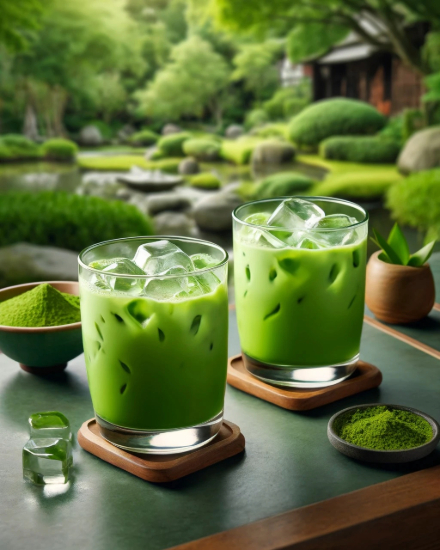
Hello, everyone! I am so excited to talk about one of my favorite drinks today—the matcha latte! There are many different kinds of matcha latte in this world of matcha, and this oat milk matcha latte recipe is easy to make and so delicious.
Introduction to Oat Milk Matcha Latte Recipe
Among tea enthusiasts, Matcha has become very popular as a vibrant “Green Elixir” for its unique taste and health-promoting benefits.
This powdered green tea plays a huge role in the Japanese tea tradition and is a cultural heritage. In Korea, matcha is called malcha, and it is widely cultivated on Jeju Island. Whenever I go to Korea, I get a huge package of Malcha back with me! A matcha latte is one of my favorites, and matcha blended with soft-flavored oat milk is the best drink for me.
But for those of you who are not very familiar with matcha, please allow me to go through some information about matcha—caffeine content, the difference between matcha and green tea, health benefits, how to store it, and finally, my oat milk matcha latte recipe and my tips.
Then let’s get into it!
Everything About Matcha
What is Matcha?
Matcha is a type of fine powder form of green tea made with specific cultivation of the green tea (Camellia sinensis) leaves and processing to ensure its vibrant color and earthy flavor.
Matcha is made from specially grown green tea leaves that are shade-grown for three to four weeks before harvest. The stems and veins are removed during processing, leaving only the fresh and tender leaves. The leaves are then steamed, dried, and ground into a fine powder called Matcha. It is a fine powder with very fine particles of approximately 5 to 10 microns so the powder can be mixed with water easily and become a drink.
The powder is then whisked with hot water or milk to create a frothy drink that has a bright green color that so many people around fall in love with.

What does matcha taste like?
Matcha has a distinctive earthy, slightly bitter, and sweet flavor that comes from the high levels of chlorophyll in the tea leaves.
Chlorophyll is the green pigment in plants that has a lot of health benefits. I wrote in detail about the benefits of Chlorophyll and why you need to eat more greens in my blog post.
The flavor of matcha can vary depending on the variety of recipes you are using and the quality of the leaves. If you get a good quality matcha and mix it with only water, it will have a fresh, grassy, earthy, slightly bitter taste that resembles a bit of a cup of green tea, just a little more intense. The most popular matcha drink, matcha latte, includes milk and some sweetener, like how you make cafe latte. I find matcha latte could be an alternative to cafe latte for its health benefits and caffeine content. Yes, the tea leaves do contain some caffeine!
Caffeine in Matcha, Green Tea, And Coffee
How much caffeine does matcha have?
1. Matcha: 50–100 mg per cup
Matcha has more caffeine than regular green tea because green tea is water-steeped with green tea leaves, whereas matcha consumes the whole green tea leaf ground. Green tea leaves contain catechins, a form of antioxidant that is converted into caffeine during processing. Two teaspoons (about 4 grams) of matcha powder, which you need in one cup, contain about 50–100 milligrams of caffeine.
2. Green Tea: 25–50 mg per cup
While one cup of brewed green tea contains about 25–50 mg of caffeine, this means that one cup of matcha can provide up to twice as much caffeine as one cup of brewed green tea.
3. Coffee: 100–140 mg per cup
Compared to coffee, coffee has about 100–140 milligrams of caffeine. So coffee is certainly the strongest when it comes to wake-me-up power.
Watch your caffeine dose!
Therefore, it is advised that you shouldn’t drink too much matcha if you are sensitive to caffeine like me. Side effects of caffeine overdose include insomnia, anxiety, jitteriness, headaches, nausea, and heart palpitations, especially if consumed in large amounts or on an empty stomach. I feel all of those symptoms when I overdose myself with caffeinated drinks like matcha or coffee! But fear not; caffeine can also have a lot of benefits for us if consumed in the right amount and in the right way.
We have covered the caffeine amount in green tea and matcha, but what are the other differences between matcha and green tea?
Matcha vs Green Tea
So if Matcha is a powder form of green tea, how different are they? Although matcha and green tea are made from the same green tea leaves, the cultivation, manufacture, and process of making each of them are quite different. Here are some key bullet points of the differences.
- Matcha is made from only young leaves without any stems. Green tea is loose-leaf and usually contains some stems.
- Matcha is ground into a fine powder and mixed with water. Green tea is steeped in hot water.
- Matcha has a lot more antioxidants than regular green tea, including catechins, which turn into caffeine.
- Matcha has nearly double the amount of caffeine than regular green tea.
- Matcha has fewer tannins than regular green tea because it undergoes less oxidation during processing.
Health Benefits of Matcha
I love matcha so much for its wonderful health benefits! I always try to include some greens in my daily diet, but when I can’t, I try to get a cup of Matcha. It is leafy green with lots of chlorophyll in powder form. We all need to eat our leafy greens! Out of countless health benefits of Matcha, here are some of the few based on scientific research.
1. Protect Brain Function
Matcha is a great anti-aging drink. It helps protect brain function by increasing oxygen flow to the brain and can enhance memory recall, cognitive performance, attention, and motivation. That is why there are many Matcha supplements out there. My take on that is: just drink up more matcha latte!
2. Improve Fertility
Matcha may help improve fertility by increasing sperm quality and mobility. The polyphenols, vitamin E, selenium, and more in green tea leaves can play a role in improving fertility.
3. Strengthen Bones
It is quite surprising, but yes! The abundance of Vitamin K in Matcha can help strengthen bones by stimulating bone formation and preventing bone loss. Vitamin K is responsible for helping the body absorb calcium and mineralize bones, so drinking Matcha can help your bones get stronger.

All Natural Beauty Tips | 3 Proven Foods for Healthy Skin
Certain food ingredients have been scientifically proven to have positive impacts on our skin. And one of them is green tea, including matcha. Wow, let’s drink lots of matcha lattes! Read my blog post to learn about the top three proven food ingredients that will help you have healthy skin.
4. Helps Skin Elasticity
Rich antioxidant properties can keep your skin young, improving its elasticity, texture, and tone. Its ability is so powerful that green tea extract has been used in many skincare products. In fact, I used to work with a K-beauty brand that manufactured skincare that was made with black tea! (Black tea is fermented tea from the green tea leaves.) So drinking matcha is filling the anti-aging power from within. Green tea is considered one of the top 3 foods for skin health. I wrote in detail about that in my blog post about natural beauty tips.
5. Regulates appetites
Drinking lots of green tea and Matcha is one of the Japanese beauty secrets. Japanese are known for staying healthy and fit until they are old, and this certainly helps! I remember when I was living in Japan, there was always green tea or Matcha served before, during, and after meals at restaurants and when you visited Japanese homes. That’s when I really developed my love for green tea.
Green tea contains caffeine and chlorophyll, which serve as appetite suppressants and thus, control our appetite. If you look at some of the diet pills out there, you’ll be able to see some green tea extract on the ingredient label. Again, my take is to drink more green tea and Matcha!
More on the health benefits of Matcha
There are just too many potential health benefits you could get from Matcha, so here are some points for you to read.
- It may help fight cancer by inhibiting tumor growth and inducing apoptosis (cell death) in cancer cells.
- It may help prevent type 2 diabetes by improving insulin sensitivity and glucose metabolism.
- It may help combat depression by increasing serotonin levels and reducing inflammation in the brain.
- It may help lower cholesterol levels by reducing LDL (bad) cholesterol and increasing HDL (good) cholesterol.
- It may help lower blood pressure by relaxing blood vessels and reducing oxidative stress.
How to Store Matcha
I went to one of the tea stores in Oslo, Norway, and they had their matcha in a big glass jar. The store had lots of lights coming in from the large window, and I could already see that the Matcha was degraded and lost its vibrant colors from the Sun. It was greyish green, not a beautiful deep green.
Storing Matcha properly is very important. There would be no point for you to purchase premium matcha if you were to have it degraded by not storing it well. This is a food storage method that applies to most of the food kinds, but it is especially important when it comes to storing Matcha. Matcha is a very fine particle that is susceptible to heat, humidity, direct sunlight, and oxidation. Store your matcha in a dark and cool place, tightly sealed. I store my matcha in my fridge.
My Other Matcha Recipes
Are you crazy about matcha like me? Here are my other matcha recipes.
Best Matcha for the Matcha Latte

 My Matcha Pick
Encha Ceremonial Grade Matcha Powder from Uji, Japan (30g/1.06oz)
Sweetener for Oat Milk Matcha Latte Recipe
1. Allulose Syrup
My Pick
My Normal Keto Allulose 17.1 Fl Oz – Allulose, Monk Fruit and Stevia Blend
Using a good bottle of fiber syrup is important to making the best latte. It adds sweetness to the latte while making it healthy!
Allulose is often used in Korean cuisine as it has fewer calories than real sugar and doesn’t add any other flavor. I love using allulose or date syrup in my recipes.
To make the best matcha latte, you need a healthy sweetener that only adds sweetness to bring out the best flavor of the matcha.
Oat Milk Matcha Latte Recipe


Oat Milk Matcha Latte Recipe
Ingredients
Equipment
Method
- Use a strainer to sift the matcha. You can skip this process, but it can make mixing it with water easy without creating lumps.
- In a cup, put 1/3 cup of hot water. 80°C or 176°F is the ideal temperature to make it warm enough without damaging the matcha taste or the colors.
- Mix quickly with the whisk in a circular motion or a zig-zag motion for approximately 15 seconds. When matcha starts to foam on the top, it is ready.
- Add the allulose syrup to the matcha mixture and mix well.
- If you want a hot matcha latte, heat the oat milk and pour it into a cup.
- Pour the matcha mixture over the milk base in the cup. Enjoy!
- If you want an iced oat milk matcha latte, fill your glass with ice. Pour oat milk over the ice.
- Pour the matcha mixture over the milk base in the cup. Enjoy!
Tips for the Best Oat Milk Matcha Latte Recipe
1. Use Spirulina for More Colors
If you want a stronger green color, mix spirulina in your oat milk matcha latte. It’s a technique many bakeries in Japan use to provide a more vivid green color when Matcha is used in baked goods. It works so well! You only need a tiny bit of spirulina powder, maybe 1/10 of the amount of green tea, to show the colors better while not including the obvious seaweed flavor of spirulina.

Using a tiny bit of spirulina powder in matcha recipes can really make the color pop!
2. Consider Malcha from Jeju Island
Have you tried malcha from Korea?
I usually get Korean Malcha, the green tea powder in Korea, grown on Jeju Island. Malcha from Jeju island is often more affordable than Matcha too. In Korea, Starbucks offers Malcha Latte made from Jeju organic Malcha! It’s one of my favorite drinks to grab when I’m in Korea. Jeju Island is the biggest island in the Southern part of South Korea, and it’s known for its beautiful UNESCO-registered nature. This island grows lots of green tea and citrus fruits, so people in Korea always get their green tea and clementines here.
My Korean Malcha Pick
OSULLOC Pure Matcha Powder, Premium Organic (USDA) from Jeju, 1.41 oz, 40g
This matcha powder made with premium organic tea leaves is from a famous Korean tea brand, and its ingredients are sourced from Jeju Island. Starbucks in Korea has a matcha latte on their menu and they also use matcha powder from Jeju Island! So why don’t you try Jeju malcha for your oat milk matcha latte?
Summary of Oat Milk Matcha Latte Recipe
Matcha latte is one of my favorite drinks in the world. The earthy and bitter flavor of matcha mixed with the round and sweet taste of some oat milk combined with date syrup—it’s heaven for me. It’s great, either hot or cold. It’s not only delicious but also has countless health benefits. This is what I love about finding new plant-based recipes: they are delicious and healthy so the more you eat, the healthier you become. I hope you learned a few things about Matcha in this post and hope you try it!
Other Matcha Recipes You Might Like
If you enjoyed this oat milk matcha latte recipe, you might like these other matcha recipes on my blog 💚

Best Matcha Ice Cream Recipe | How to Make Matcha Ice Cream
Learn how to make matcha ice cream using premium ingredients (I have recommendations!) with an original Japanese taste. Try this best matcha ice cream recipe.

Matcha Float | Japanese Matcha Ice Cream Soda Recipe
Make this matcha float with the original Japanese matcha taste! With some sparkling Sprite, this will be the best matcha float you’ve ever had.
Affiliate Disclosure: As an Amazon Associate, I may earn from qualifying purchases at no additional cost to you if you choose to purchase the recommended product. The support allows me to research and continue working to provide the best information for you. Please rest assured that I only give my honest opinions and recommendations.
Leave a Reply